VA Loans in Hauppauge: Exclusive Programs for Military Families in Suffolk County For veterans, active-duty…
The Top 10 Questions to Ask Your Mortgage Broker Before Signing Anything
The Top 10 Questions to Ask Your Mortgage Broker Before Signing Anything
Your guide to navigating the Long Island real estate market with confidence, brought to you by RCG Mortgage in Hauppauge, NY.
Introduction: Don’t Sign on the Dotted Line Until You Read This
Buying a home is widely considered one of the most stressful events in a person’s life. Whether you are a first-time homebuyer looking for a starter home in Hauppauge or an experienced investor expanding your portfolio across Long Island, the financial stakes are incredibly high. The mortgage process involves a mountain of paperwork, complex financial terminology, and interest rates that seem to change with the wind.
Many borrowers make the mistake of walking into a big bank and accepting the first offer they receive. However, savvy borrowers know that partnering with a local mortgage broker can unlock better rates, more flexible terms, and a personalized experience that big banks simply cannot match. But not all brokers are created equal.
At RCG Mortgage, we believe in total transparency. Our motto is simple: “Brokers Do it Better… RCG Does it Best.” To prove it, we have compiled the ultimate list of questions you need to ask before you commit to a lender. These questions will help you uncover hidden fees, understand your long-term financial obligations, and ensure you are working with a partner who truly has your best interests at heart.
Why Working with a Local Hauppauge Broker Matters
Before we dive into the questions, it is essential to understand the distinction between a “loan officer” at a retail bank and an independent mortgage broker. When you walk into a traditional bank branch in Suffolk County, that officer can only sell you their specific products. If their rates are high or their guidelines are strict, you are out of luck.
A mortgage broker, like Andrew Russell and the team at RCG Mortgage, acts as a middleman between you and dozens of wholesale lenders. We shop the market on your behalf. This is particularly important in New York, where property taxes and closing costs can be unique compared to the rest of the country. You need a guide who understands the local landscape of Hauppauge and the broader Long Island market.
The Top 10 Questions You Must Ask
Equip yourself with these questions during your initial consultation. The answers you receive will tell you everything you need to know about the broker’s expertise and integrity.
1. “What specific loan programs do you offer that fit my unique situation?”
Why this matters: There is no such thing as a “one-size-fits-all” mortgage. If a broker immediately pushes you toward a 30-year fixed conventional loan without asking about your financial goals, run the other way.
The RCG Difference: We take a holistic look at your finances. Are you a veteran eligible for a VA Loan with $0 down? Are you a first-time buyer who might benefit from an FHA Loan with lower credit score requirements? Perhaps you are self-employed and need a Bank Statement Loan (Non-QM) because your tax returns don’t reflect your true cash flow. A great broker offers a diverse menu of products, including:
- Conventional Fixed-Rate Mortgages
- FHA Loans (Low down payment options)
- VA Loans (For military and veterans)
- USDA Loans (For rural/suburban areas)
- Jumbo Loans (For high-value properties common in NY)
- Non-QM / Bank Statement Loans (For entrepreneurs)
2. “Are you a Mortgage Broker or a Direct Lender?”
Why this matters: This determines who they work for. A direct lender works for the bank; a broker works for you.
The RCG Difference: As an independent brokerage, we have access to wholesale rates that are often lower than retail rates. We can compare offers from multiple lenders to find the specific interest rate and monthly payment options that best fit your personal situation. We aren’t beholden to one bank’s rulebook.
3. “What are the total estimated closing costs, and are there any ‘junk fees’?”
Why this matters: The interest rate isn’t the only cost of a loan. Closing costs in New York can be substantial. Some lenders hide “junk fees” (like excessive administrative or processing fees) in the fine print.
The RCG Difference: We provide a clear Loan Estimate (LE). We explain every line item, distinguishing between third-party fees (like title insurance and appraisals) and lender fees. We pride ourselves on the “Nordstrom” experience—high-end service with no hidden surprises.
4. “How do you handle Rate Locks, and what happens if rates drop before I close?”
Why this matters: In a volatile market, interest rates can swing daily. You need to know if your rate is guaranteed.
The RCG Difference: We discuss “Rate FOMO” (Fear Of Missing Out) openly. We help you decide the optimal time to lock your rate. Furthermore, you should ask about a “float-down” policy. If rates drop significantly after you lock but before you close, some lenders allow you to snag the lower rate. We guide you through this strategy to ensure you aren’t stuck paying more than necessary.
5. “What is your average turnaround time from application to clear-to-close?”
Why this matters: In the competitive Long Island housing market, speed wins. If your financing takes 60 days, the seller might back out or choose a cash offer. Real estate contracts in New York have strict dates.
The RCG Difference: We operate with a “Ford assembly line” efficiency. By simplifying the underwriting process and utilizing in-house processing, we often close loans faster than the industry average. Our team stays in constant communication with your real estate agent and attorney to ensure deadlines are met.
6. “Do you handle the processing and underwriting in-house?”
Why this matters: When processing is outsourced to a third-party company in another time zone, files get lost, and communication breaks down.
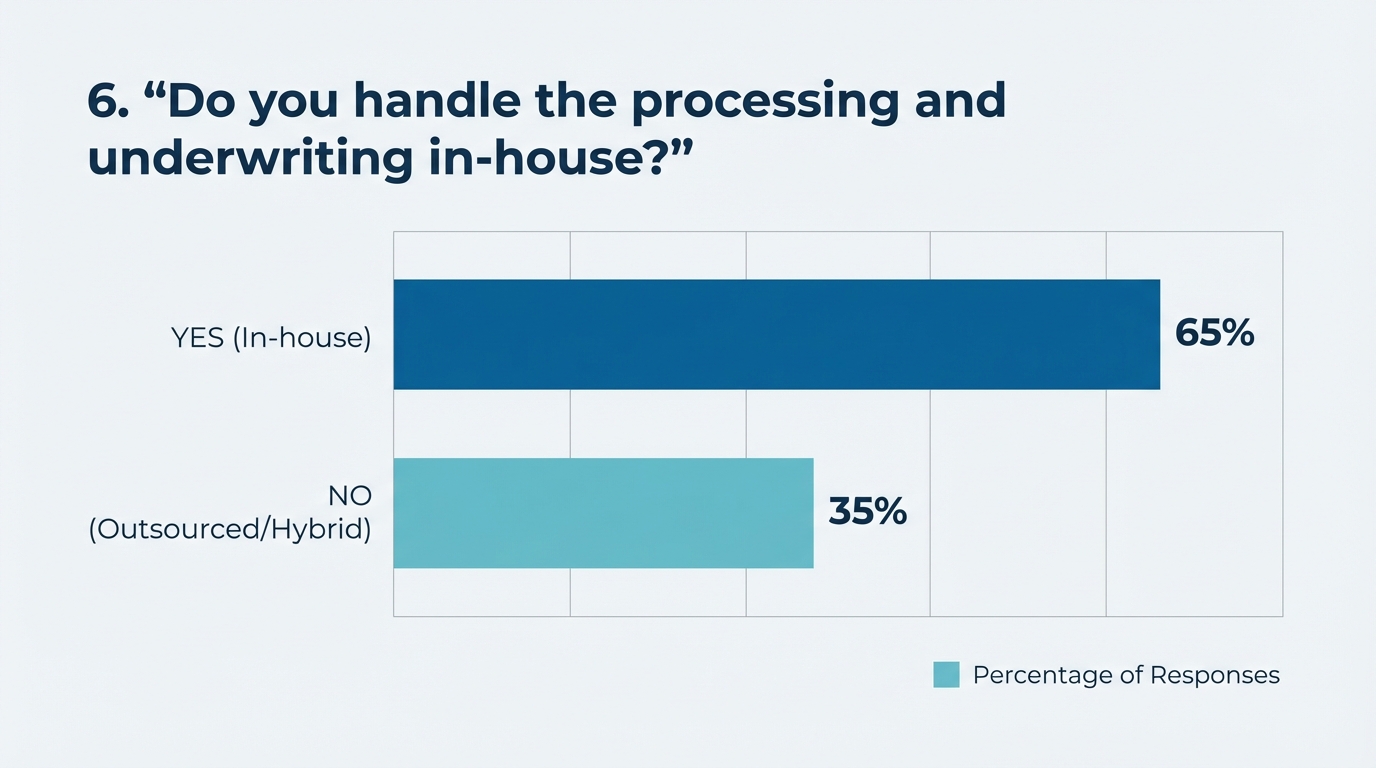 The RCG Difference: We have a talented team right here in Hauppauge. This control over the process allows us to troubleshoot issues immediately. If an underwriter needs a specific document, we call you instantly rather than waiting days for an email chain to resolve.
7. “What is the difference between Pre-Qualification and Pre-Approval with your firm?”
Why this matters: A pre-qualification is often just a rough estimate based on self-reported numbers. A pre-approval is a verified commitment to lend based on documents (W2s, bank statements).
The RCG Difference: In today’s market, a pre-qualification letter is barely worth the paper it’s printed on. We aim to get our clients fully pre-approved. This turns you into a “cash-equivalent” buyer, giving you significant leverage when negotiating with sellers in Suffolk and Nassau counties.
8. “How will you communicate with me throughout the process?”
Why this matters: Mortgage banking hours shouldn’t be 9-to-5 because real estate happens on nights and weekends. You don’t want a broker who ghosts you on a Sunday when you are trying to make an offer.
The RCG Difference: Our team, led by Andrew Russell, is known for accessibility. Whether via text, email, or phone, we keep you updated. We believe that an informed borrower is a happy borrower, which is why we have hundreds of 5-star reviews praising our communication.
9. “Can you explain the APR versus the Interest Rate?”
Why this matters: This is a test of the broker’s ability to educate you. The interest rate is what determines your monthly payment, but the APR (Annual Percentage Rate) includes the rate plus the costs to get the loan (points, fees).
The RCG Difference: We want you to understand the “true cost” of your loan. A lender might advertise a super-low rate but hide massive fees that drive up the APR. We break this down for you so you can make an apples-to-apples comparison.
10. “What is your strategy for my future mortgage needs (Refinancing)?”
Why this matters: A mortgage isn’t a “set it and forget it” product. A good broker thinks about your 5-year and 10-year plan.
The RCG Difference: We view our clients as partners for life. If rates drop six months after you buy, we will reach out to discuss an FHA Streamline Refinance or a conventional rate-and-term refinance to lower your payments. We also advise on Cash-Out Refinances to help you consolidate high-interest debt or fund home renovations.
Comparison: RCG Mortgage vs. Big Banks vs. Online Lenders
To help you visualize the value of working with a specialized broker, here is a quick comparison of what you can expect.
| Feature | RCG Mortgage (Broker) | Big Retail Bank | Online/Call Center Lender |
|---|---|---|---|
| Loan Options | Unlimited (Access to multiple wholesale lenders) | Limited (Only their own products) | Generic (Cookie-cutter programs) |
| Interest Rates | Competitive/Wholesale (We shop for you) | Retail Rates (Often higher overhead) | Variable (Often hidden fees) |
| Local Expertise | High (Hauppauge/Long Island Experts) | Variable (Branch dependent) | Low (National call centers) |
| Speed to Close | Fast (In-house control) | Slow (Bureaucratic layers) | Unpredictable |
| Communication | Direct Access (Cell phone/Text) | Business Hours Only | Automated/Chat Bots |
Why Choose RCG Mortgage?
Choosing the right mortgage partner is about trust and track record. RCG Mortgage isn’t just another company; we are a pillar of the Hauppauge community.
- Award-Winning Service: We have been recognized as the NAMB Mortgage Broker of the Year for 2022, 2023, 2024, and 2025.
- Top Rankings: Ranked #1 on Long Island and #1 in New York by Scotsman Guide (2024).
- Growth & Integrity: Proudly listed on the Inc. 5000 Fastest Growing Private Companies and accredited by the Better Business Bureau.
Founded by Andrew Russell in 2017, our mission is to make the mortgage process simple yet efficient. We combine the personal touch of a small business with the technological power of a large firm.
Frequently Asked Questions (FAQs)
1. Do I need a 20% down payment to buy a home in New York?
Absolutely not. While 20% eliminates Private Mortgage Insurance (PMI), many buyers in Hauppauge use FHA loans (3.5% down) or conventional loans with as little as 3% down. Veterans can often purchase with 0% down through VA loans. We can help you determine the best down payment strategy for your budget.
2. How does a mortgage broker get paid?
In most residential transactions, the mortgage broker is paid by the lender, not the borrower. This means you get the benefit of our rate-shopping services and expertise without writing us a separate check. We are transparent about all compensation disclosures at the beginning of the process.
3. Can RCG Mortgage help if I have bad credit?
Yes. We work with a wide variety of lenders, some of whom specialize in borrowers with less-than-perfect credit. We can also provide advice on how to improve your credit score quickly to qualify for better terms. Don’t assume you can’t buy until you speak with us.
4. What documents do I need for a pre-approval?
To provide a solid pre-approval, we typically need your last two years of tax returns (or W2s), two months of bank statements, and recent pay stubs. If you are self-employed, we may look at 12-24 months of bank statements instead of tax returns.
5. How long is a pre-approval good for?
Typically, a pre-approval letter is valid for 60 to 90 days. Since credit reports expire after a certain period, we may need to refresh your file if your home search takes longer than three months. We stay in touch to keep your approval active.
Ready to Get Started?
Don’t leave your home financing to chance. Partner with the #1 Mortgage Broker on Long Island. Whether you are buying your first home, moving up to a larger property, or looking to refinance, RCG Mortgage is here to guide you every step of the way.
Contact Andrew Russell and the RCG Team today:
- Phone: (516) 246-6353
- Email: andrew@rcgmortgage.com
- Office: 490 Wheeler Rd Suite 252, Hauppauge, New York 11788
Take the First Step Toward Homeownership
Get a no-obligation quote or start your pre-approval process online in minutes.

